[Unitree Go2 part 4] feed forward 토크 적용해보기
[Unitree Go2 part 4] feed forward 토크 적용해보기
현재상황
go2에 아무리 커멘드를 주어도 go2가 발을 떼지 못하고 base만 command방향에 따라 기울이고 있는 상황이었습니다.. 하지만 뒷다리의 힘이 앞다리에 비해 약하다는걸 확인하고 stiffness를 높여주어 조금 뻣뻣하지만 강한 출력을 낼 수 있게 해주자 드디어 로봇이 움직이기 시작했습니다!
idea
상황
- unitree go2의 /lowstate와 강화학습 명령이 내리는 /lowcmd 값의 q값을 비교해보았을때 0.2 radian정도의 오차가 발생하는 것을 확인하였습니다.
- 0.2 rad정도의 오차가 내부 제어기 안에서 이동할 만큼의 충분한 토크를 생성하고 있지 못하고 있고 이로인해 커멘드에 따라 로봇의 hip이나 thigh에서는 기울이는 정도의 힘을 내지만 claf에서는 힘을 내지 못하는게 아닐까?
- go2로봇은 대각선의 발을 번갈아 드는데 뒷발의 토크가 약하여 발을 들지 못하는 것을 확인하였습니다.
해결책
- 중력의 영향으로 각 관절에 버티기 위한 토크의 양을 계산하였습니다.
- isaaclab 시뮬레이션에서는 중력 보상 토크를 계산하는 함수가 있습니다.
get_gravity_compensation_forces→ 학습 시에 사용
GravityCompJointPositionAction
1
2
3
4
5
6
7
8
9
10
11
12
13
14
15
16
17
18
19
20
21
22
23
24
25
26
27
28
29
30
31
32
33
34
35
36
37
38
39
40
41
42
43
44
45
46
47
48
49
50
51
52
53
54
55
56
57
58
59
60
from __future__ import annotations

import torch

from isaaclab.envs.mdp.actions import actions_cfg
from isaaclab.envs.mdp.actions.joint_actions import JointPositionAction
from isaaclab.utils import configclass


class GravityCompJointPositionAction(JointPositionAction):
    """Joint position action with model-based gravity compensation."""

    cfg: "GravityCompJointPositionActionCfg"

    def _get_generalized_gravity_forces(self) -> torch.Tensor:
        view = self._asset.root_physx_view
        for method_name in (
            "get_gravity_compensation_forces",
            "get_generalized_gravity_forces",
            "get_gravity_forces",
        ):
            method = getattr(view, method_name, None)
            if callable(method):
                forces = method()
                return torch.as_tensor(forces, device=self.device, dtype=self.processed_actions.dtype)
        raise AttributeError("Articulation view does not expose a gravity compensation method.")

    def apply_actions(self):
        super().apply_actions()

        if self.cfg.gravity_comp_scale == 0.0:
            return

        generalized_forces = self._get_generalized_gravity_forces()
        root_dofs = generalized_forces.shape[1] - self._asset.num_joints
        if root_dofs < 0:
            raise RuntimeError(
                "Gravity compensation vector is smaller than the joint dimension. "
                f"got={generalized_forces.shape[1]}, num_joints={self._asset.num_joints}"
            )

        joint_forces = generalized_forces[:, root_dofs:]
        feedforward_effort = joint_forces[:, self._joint_ids] * float(self.cfg.gravity_comp_scale)

        if self.cfg.gravity_comp_max_torque is not None:
            limit = abs(float(self.cfg.gravity_comp_max_torque))
            feedforward_effort = torch.clamp(feedforward_effort, min=-limit, max=limit)

        self._asset.set_joint_effort_target(feedforward_effort, joint_ids=self._joint_ids)


@configclass
class GravityCompJointPositionActionCfg(actions_cfg.JointPositionActionCfg):
    """Configuration for joint position control with gravity compensation."""

    class_type: type = GravityCompJointPositionAction

    gravity_comp_scale: float = 0.0
    gravity_comp_max_torque: float | None = None
- depoly 할때에는 go2의 urdf파일로부터 go2 각 파트의 질량 정보를 가져와 joint_pos + base quaternion(IMU) 를 입력으로 각 모터에 필요한 $\tau_{ff}$ 를 계산합니다. $τ_{computed}=k_p∗(q_{des}−q)+k+d∗(q’{des}−q’)+τ{ff}$
- isaaclab 시뮬레이션에서는 중력 보상 토크를 계산하는 함수가 있습니다.
- 이러한 방법을 통해 position error가 없는데도 error를 억지로 늘려서 서있기 위한 토크를 만들어야 했던 영향을 제거하고 순전히 target position과의 오차를 줄이기 위한 토크를 낼 수 있습니다.
result
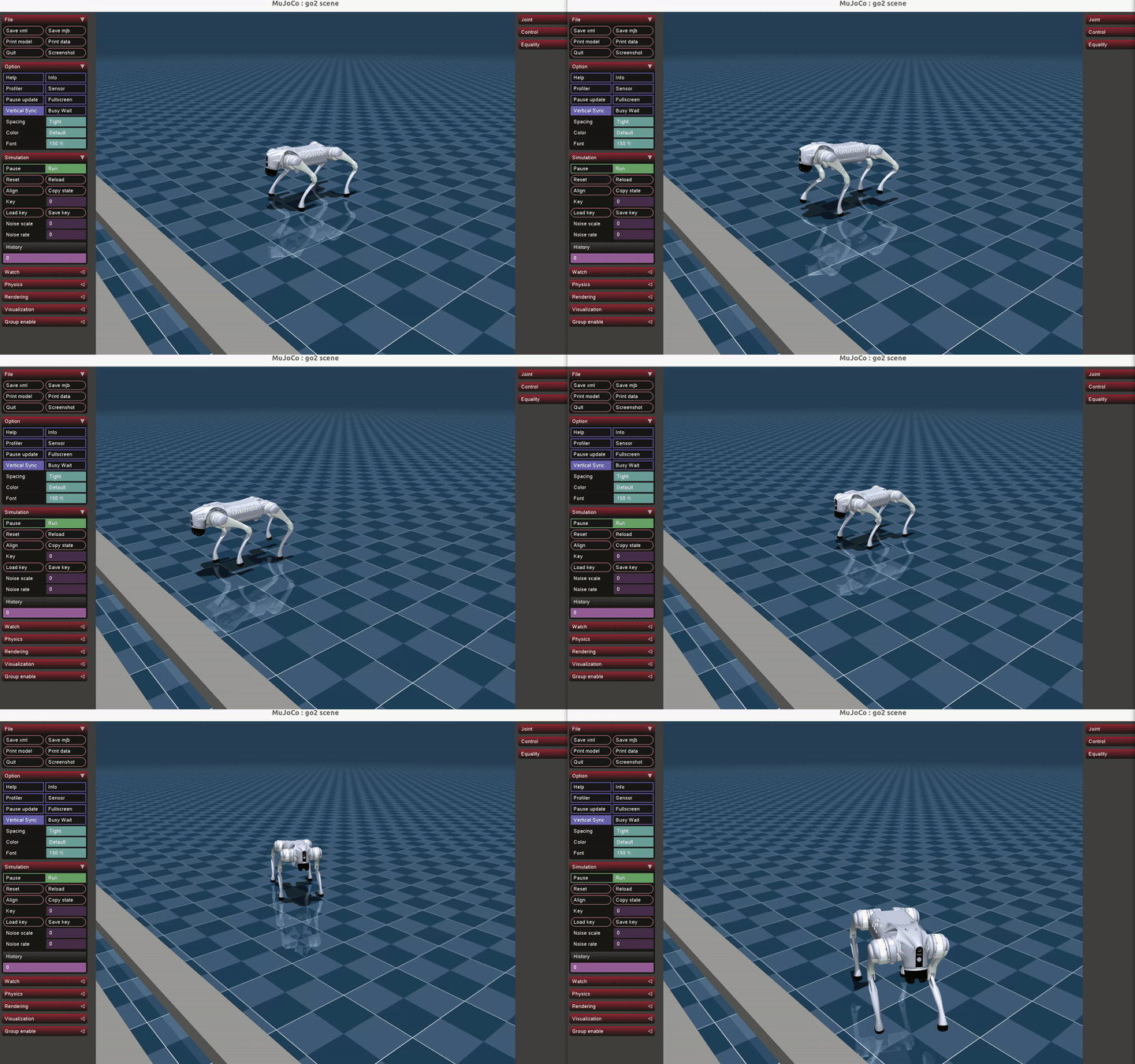
Problem..
걷는 와중에 calf joint가 거의 끝까지 올라가는 것을 확인할 수 있었습니다.. 너무 발을 질질 끄는 것에 패널티를 주었더니 이렇게 된 것 같습니다.
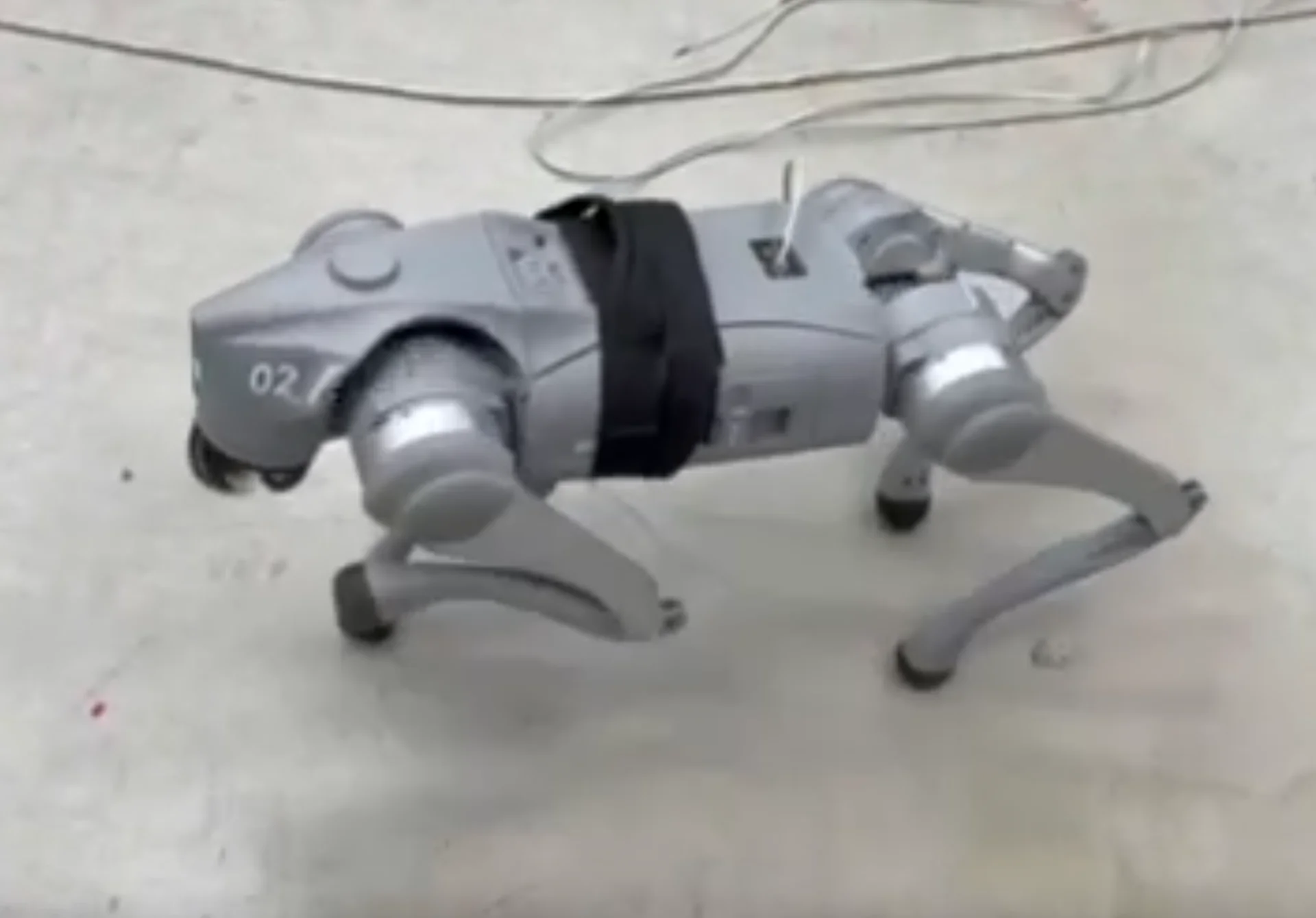
- 앞으로 이동시에 base의 몸통이 매우 기울어진채로 이동하게 됩니다. 또한 대각선의 발이 동시에 움직여져야 하는데 같은 쪽의 발이 들리며 불안정한 보행을 보입니다.
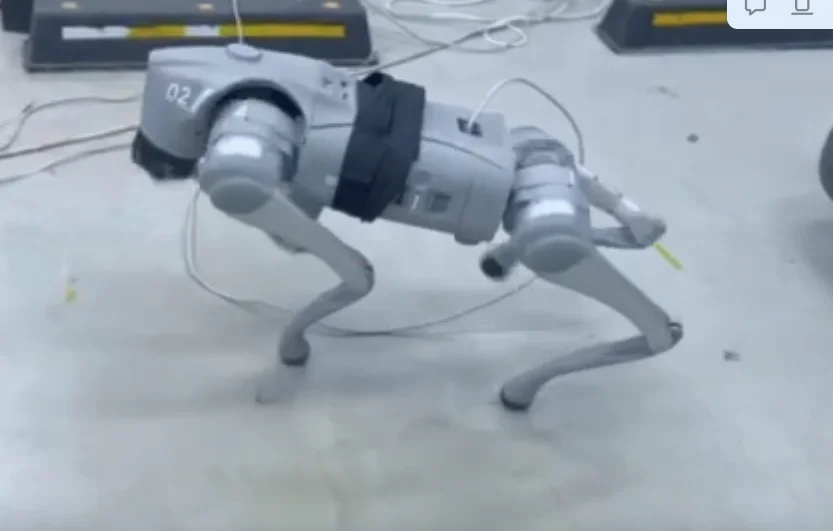
- mujoco상에서 go2가 움직일때 발을 통통 거리며 걷는 것을 확인하였습니다. 이러한 현상이 현실의 시뮬레이터로 넘어오며 과격해진 것으로 추정중입니다.
This post is licensed under CC BY 4.0 by the author.